

I’ll create a blog post about the Eruption of Mount Vesuvius following the specified guidelines:
The Eruption of Mount Vesuvius in 79 AD stands as one of the most catastrophic and well-documented natural disasters in human history. On an fateful day in late August, the peaceful Roman cities of Pompeii and Herculaneum were forever transformed by the violent fury of this volcanic monster, creating a moment of geological devastation that would capture the imagination of historians and archaeologists for centuries to come.
The Geological Background of Mount Vesuvius

Located in the Campania region of Italy, Mount Vesuvius is a stratovolcano with a complex geological history. Situated approximately 9 kilometers from Naples, this infamous mountain has been a source of both fascination and terror for millennia. The volcano is part of the Campanian volcanic arc, a chain of volcanic mountains formed by the subduction of the African tectonic plate beneath the Eurasian plate.
Volcanic Characteristics

Mount Vesuvius is unique among European volcanoes due to its:
- Explosive potential - Capable of producing highly destructive eruptions
- Proximity to populated areas - Posing significant risk to millions of residents
- Complex magmatic composition - Allowing for varied and unpredictable eruption styles
The Catastrophic Eruption of 79 AD

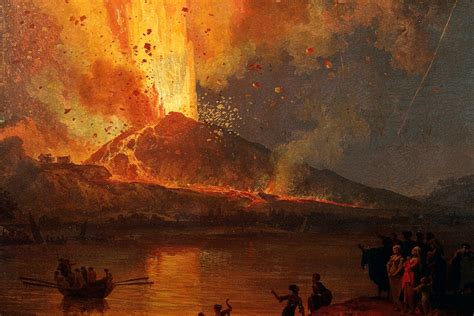
On August 24, 79 AD, Mount Vesuvius unleashed a cataclysmic eruption that would become one of the most famous volcanic events in recorded history. The eruption began with a massive Plinian column of smoke and ash that rose an estimated 33 kilometers into the sky, blocking out sunlight and raining destruction upon the surrounding cities.
Stages of Destruction

| Eruption Stage | Description |
|---|---|
| Initial Eruption | Massive ash column and pyroclastic materials |
| Pyroclastic Flows | Superheated clouds of gas and volcanic debris |
| Ash Fallout | Complete burial of Pompeii and Herculaneum |
Human Impact

The eruption’s devastation was total and immediate. An estimated 16,000 people perished in the cities of Pompeii and Herculaneum, trapped by the sudden and overwhelming volcanic event. The pyroclastic flows reached temperatures of approximately 700 degrees Celsius, instantly killing anyone in their path.
🌋 Note: The preservation of Pompeii and Herculaneum by volcanic ash has provided unprecedented archaeological insights into Roman life.
Scientific and Archaeological Significance

The Eruption of Mount Vesuvius has become a crucial case study for volcanologists and archaeologists. The remarkable preservation of the cities beneath the volcanic debris has allowed unprecedented glimpses into daily life during the Roman Empire, creating a unique snapshot frozen in time.
Modern scientific techniques, including carbon dating and advanced imaging technologies, continue to reveal new details about this historic event. Researchers have reconstructed the eruption's progression with remarkable precision, understanding the sequence of events that led to such complete destruction.
The legacy of this eruption extends far beyond its immediate devastation. It serves as a powerful reminder of the unpredictable and destructive potential of natural geological forces, highlighting humanity's vulnerability in the face of planetary processes.
When did the Eruption of Mount Vesuvius occur?

+
The eruption occurred on August 24, 79 AD, destroying the cities of Pompeii and Herculaneum.
How many people died in the eruption?

+
Approximately 16,000 people are estimated to have perished during the eruption.
What makes the Vesuvius eruption historically significant?

+
The eruption preserved an entire Roman civilization under volcanic ash, providing unprecedented archaeological insights into Roman life.
