
I’ll create a comprehensive blog post about sorting by month in Excel following the specified guidelines:
Mastering data organization in Excel can significantly improve your productivity, and one of the most common tasks is sorting data by month. Whether you’re working with financial reports, project timelines, or seasonal data, knowing how to sort by month in Excel is an essential skill for professionals across various industries. This guide will walk you through multiple methods to effectively arrange your data chronologically, ensuring your spreadsheets are clean, organized, and easy to interpret.
Understanding Month Sorting in Excel
Excel offers several approaches to sort data by month, each suitable for different data formats and specific requirements. The key is to understand the structure of your data and choose the most appropriate sorting method. Whether you’re dealing with date columns, text-based month names, or custom date formats, Excel provides flexible solutions to meet your needs.
Method 1: Sorting by Date Column

The most straightforward way to sort by month in Excel is when you have a standard date column. Follow these steps:
- Select the entire data range you want to sort
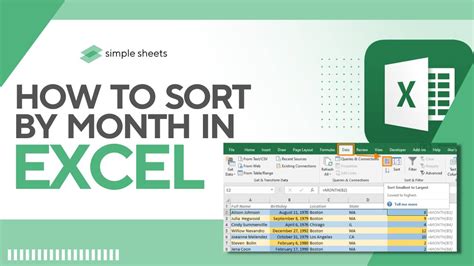
- Click on the "Data" tab in the Excel ribbon
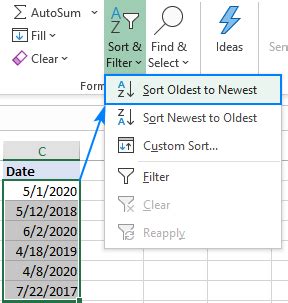
- Choose "Sort" in the "Sort & Filter" group
- In the Sort dialog box, select your date column
- Choose "Oldest to Newest" or "Newest to Oldest" depending on your preference
- Click "OK" to apply the sorting
Method 2: Sorting by Month Name
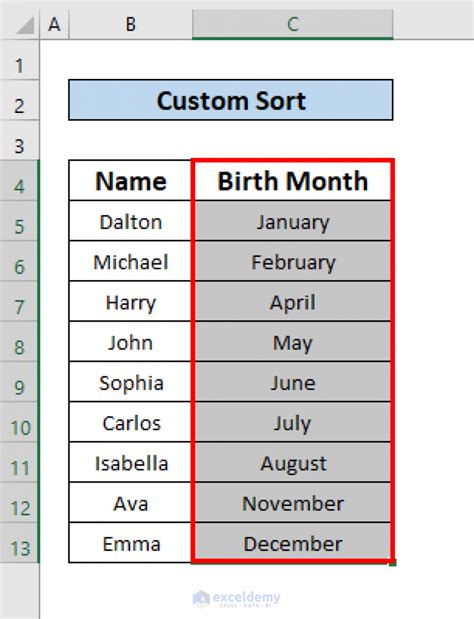
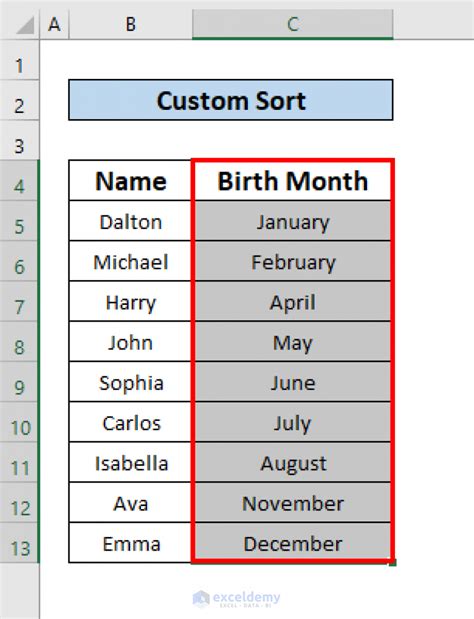
When your data contains text-based month names, sorting becomes slightly more complex. Excel doesn’t automatically recognize the chronological order of month names.
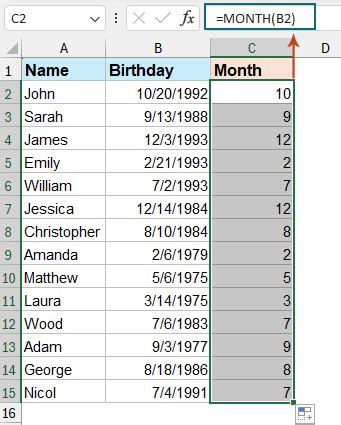
- Create a helper column next to your month column
- Use the MONTH() function to convert month names to numerical values
- Sort based on this new helper column
- Example formula:
=MONTH(DATEVALUE("1-"&A2&"-2026"))
Advanced Sorting Techniques
For more complex datasets, you might need advanced sorting strategies:
- Custom Sort Order: Use the "Custom Sort" option in the Sort dialog
- Multiple Column Sorting: Sort by year first, then by month
- Pivot Tables: Create dynamic month-based views of your data
🔍 Note: Always create a backup of your original data before performing complex sorting operations to prevent accidental data loss.
Common Challenges in Month Sorting
Professionals often encounter issues when sorting months due to inconsistent data formats. Here are some common challenges and their solutions:
- Inconsistent Date Formats: Standardize your date column before sorting
- Text vs. Date Columns: Convert text months to actual date values
- Regional Settings: Adjust Excel's date interpretation settings
Mastering month sorting in Excel transforms raw data into meaningful, chronologically organized information. By understanding these techniques, you can quickly analyze trends, track progress, and present data in a clear, logical manner.
Can I sort months in a custom order?

+
Yes, Excel allows custom sorting through the “Custom Sort” option where you can manually define the order of months.
What if my month names are in different languages?
+
Use the MONTH() function with DATEVALUE() to convert month names to numerical values, which works across different language settings.
How do I handle partial year data?
+
Create a helper column that assigns a consistent year (like the current year) to ensure proper chronological sorting.