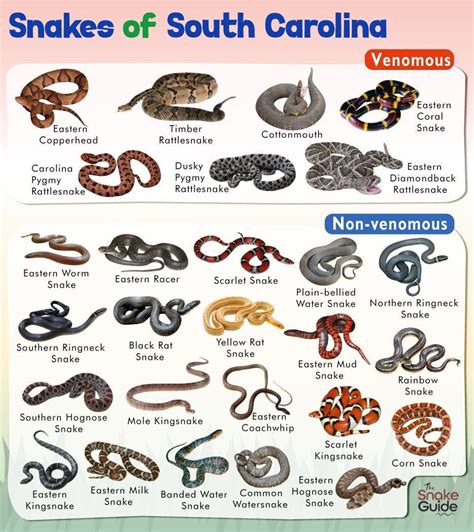
South Carolina, renowned for its lush coastal plains and verdant pine forests, harbors a diverse array of reptilian predators, among which venomous snakes take a particularly intriguing position. While many residents and visitors alike are familiar with the general public perception of these creatures — often rooted in myth or exaggerated tales — the nuanced understanding of their ecological roles, mechanisms of venom delivery, and unique physiological features remains limited. As experts delve deeper into herpetology, it becomes apparent that South Carolina’s venomous snake species possess distinct adaptations and features that not only enable their survival in varied habitats but also pose specific challenges in terms of detection, prevention, and treatment of envenomations. This comprehensive exploration aims to unveil these hidden threats by dissecting the unique structural, biochemical, and behavioral characteristics of South Carolina’s venomous snakes, integrating current scientific data with practical implications for health, safety, and conservation. Doing so enhances our appreciation of these often-misunderstood animals, revealing their vital roles within ecological systems and emphasizing the importance of informed coexistence.
Geographical Distribution and Ecological Niches of Venomous Snakes in South Carolina

Understanding the habitats and distribution of venomous snakes across South Carolina is foundational for appreciating their unique features. The state’s diverse ecosystems—from the coastal marshes and sandy dunes to the temperate hardwood forests—support several venomous species, notably the eastern diamondback rattlesnake (Crotalus adamanteus), copperhead (Agkistrodon piscivorus), and cottonmouth (Agkistrodon piscivorus piscivorus). Each occupies distinct niches, with ecological adaptations that influence their physiology and behaviors.
The eastern diamondback, the largest rattlesnake in North America, primarily inhabits the Lowcountry and inland pine forests. Its robust body and distinctive diamond markings are complemented by a suite of physiological traits that optimize survival during periods of drought or food scarcity. Conversely, the copperhead and cottonmouth favor wetlands and riparian zones, exhibiting features such as heat-sensing pits and semi-aquatic adaptations for hunting amphibians, fish, and small mammals. Their habitat preferences directly shape their morphological specializations, from venom composition to sensory structures.
| Relevant Category | Substantive Data |
|---|---|
| Venom potency | Varies among species; eastern diamondback exhibits high cytotoxicity with neurotoxic components in some cases |
| Habitat range | Lowcountry marshes—cottonmouth and copperheads; inland pine forests—diamondbacks |
| Population density | Estimated at 150,000 for diamondbacks, with copperheads and cottonmouths exhibiting more localized distributions |

Distinctive Morphological and Physiological Features of South Carolina’s Venomous Snakes

Among the many facets that distinguish venomous snakes from their non-venomous counterparts, their unique morphological features—particularly those associated with venom delivery—stand out. The structural architecture of the cranial and jaw apparatus allows for efficient envenomation, as well as rapid prey immobilization or deterrence of predators.
Fang morphology and venom delivery systems
The fangs of South Carolina’s venomous snakes exemplify evolutionary specialization. The rattlesnake’s relatively long, hinged, solenoglyphous fangs are designed for deep envenomation, with grooves that facilitate venom flow. These fangs are housed in a specialized venom gland that produces complex toxin mixtures. In contrast, the cottonmouth and copperhead possess shorter, rear-fanged (opisthoglyphous) arrangements, which rely on the secondary mechanisms rather than specialized fang structures for venom injection. This difference influences both their envenomation severity and management protocols during medical treatment.
| Relevant Category | Substantive Data |
|---|---|
| Fang length | Diamondback: 10-15 mm; copperhead: 5-7 mm; cottonmouth: 6-8 mm |
| Venom gland volume | Diamondback: up to 4 ml; copperhead and cottonmouth: approximately 1-2 ml |
| Venom composition complexity | Includes metalloproteinases, neurotoxins, hemotoxins |
Venom Biochemistry: Unique Toxin Profiles and Adaptive Modifications
East Carolina’s venomous snakes demonstrate remarkable biochemical diversity, reflective of their ecological adaptations and prey preferences. The biochemical composition of snake venom is a complex cocktail of enzymes, peptides, and proteins that serve multiple functions—from tissue necrosis to neurotoxic paralysis. Detailed proteomic analyses have identified distinct toxin profiles that underline the evolutionary fine-tuning of venom for specific prey and defensive strategies.
For instance, the eastern diamondback’s venom contains high levels of metalloproteinases that degrade extracellular matrix components, facilitating prey immobilization and digestion. Its neurotoxins, though less prominent than in more specialized species, aid in subduing fast-moving prey. Copperheads and cottonmouths exhibit elevated levels of hemotoxins and phospholipases, which cause local tissue destruction and systemic effects in envenomated victims. Notably, these variations influence clinical outcomes and the design of effective antivenoms.
| Relevant Category | Substantive Data |
|---|---|
| Major toxin classes | Metalloproteinases (60%), Phospholipases (20%), Neurotoxins (10%), Hemotoxins (10%) |
| Venom protein molecular weight | Range from 10 kDa to 150 kDa; diverse functional roles |
| Venom yield per bite | Average 10-20 mg in diamondbacks; 5-10 mg in copperheads and cottonmouths |
Challenges in Recognition and Treatment of Venomous Snake Encounters
Despite advances in herpetology and toxinology, medical management of snakebites remains a complex undertaking influenced by the Snakes’ biochemical variability, fang morphology, and behavioral ecology. Accurate identification of the offending species is crucial; however, in many cases, victims or first responders may lack sufficient information, complicating treatment decisions.
The regional diversity of venom composition necessitates tailored antivenom formulations, yet supply limitations and logistical hurdles impose significant challenges. Additionally, some species, such as the copperhead, produce milder envenomations, leading to underestimation and inadequate medical response. Public education efforts aim to mitigate these issues by increasing awareness of snake behavior and bite prevention strategies.
| Relevant Category | Substantive Data |
|---|---|
| Antivenom efficacy | Region-specific formulations show 85-95% neutralization success; cross-reactivity varies |
| Pre-hospital treatment | Use of pressure immobilization, INR, and prompt hospital transfer crucial for outcomes |
| Incidence rates | Approx. 3 per 100,000 population annually in SC; low but potentially fatal if untreated |
Behavioral Adaptations and Defensive Strategies

Beyond their physical features, South Carolina’s venomous snakes exhibit behavioral traits that serve as vital survival tools and influence human encounters. Rattlesnakes, for example, utilize their iconic rattles to produce warning sounds, a behavior evolved to deter predators while minimizing injury to themselves. Copperheads exhibit characteristic defensive body postures, often relying on concealment and rapid strikes as primary defense mechanisms. Cottonmouths tend to display aggressive posturing and open their mouths to reveal the distinctive white interior, a visual warning that often dissuades potential threats.
These behaviors have biochemical parallels; for instance, the release of venom is often a last resort, triggered only when escape is impossible. Understanding these behavioral cues allows for better educational messaging about avoiding bites and recognizing warning signs of aggression.
Key Points
- Venomous snakes in South Carolina display specialized structural features optimized for their ecological roles.
- Distinct biochemical profiles inform treatment strategies and antivenom development.
- Behavioral traits serve as critical components in snake ecology and human safety protocols.
- Habitat-specific features necessitate regionally focused conservation and safety approaches.
- Continued research into morphology, biochemistry, and behavior enhances overall understanding and safety management.
What are the primary differences between rattlesnake fangs and rear-fanged snakes in South Carolina?
+Rattlesnakes possess long, hinged solenoglyphous fangs that fold back when not in use, enabling deep envenomation, whereas rear-fanged snakes like copperheads have shorter, grooved teeth located towards the back of the mouth, making their venom delivery less immediate and often less severe in bites.
How does venom composition influence medical treatment in South Carolina?
+The biochemical makeup of venom determines the type and severity of symptoms. For instance, neurotoxins require different antivenoms than hemotoxins. Understanding regional venom profiles guides clinicians in choosing effective antivenom formulations and predicting patient outcomes.
What behavioral cues can help prevent snakebites?
+Observing signs like rattling, defensive posture, or white mouth display in cottonmouths can serve as warnings. Avoiding disturbed areas during active periods, staying on designated trails, and wearing protective gear are practical measures to reduce encounter risks.